Powered by RedCircle
A Cure for Cancer
short story (9 minute read)
I feel the heat seeping out of my depleted body like sea water out of a dying sponge on land. I rode these waves of fever and shivering cold twice before, but I know deep down in my bones that this time is different. I am dying.
The doctors warned me of this. They told me the virus would become more dangerous every time I contract it. But good advice is little more than hot air without the money to heed it.
My thoughts slip into anxious delirium. I should hurry my writing, or everything I have discovered will be lost.
I stepped into the sea with a smile yesterday morning. The biting cold of the lapping waves brought me into the here and now—and they kept me there, as they always did. It was one of those rare moments when I did not look back on my previous life with bitter jealousy.
Morning mist clung to the fenced off area across the bay, mingling with the dark smoke that billowed from the newly built factories. My life as a junior lab assistant had been comfortable there. Back when the buildings had still been used for pharmaceutical research. Every Monday, I had walked through those grimy sliding doors with a puffy chest, certain it would be the week we would finally isolate the active substance against lymphocytic leukaemia we had sought. Maybe we would not cure all cancers. But we would cure one of them.
A local species of small fish had shown clear signs of bone marrow depression, and we had spent months trying to isolate the molecule that caused it. We had been so close.
No one had ever caught these particular fish again after the oil spill, and we had not thought to store enough of them to continue our research. The pharmaceutical company had abandoned the laboratories and sold the facilities to a shoe manufacturer. The local workers had been fired and the international team had left for someplace else, along with the company’s small general store and medical clinic. It had been dog-eat-dog. Or rather human-eat-dog, for those the shoe manufacturer had not re-hired. Those like me.
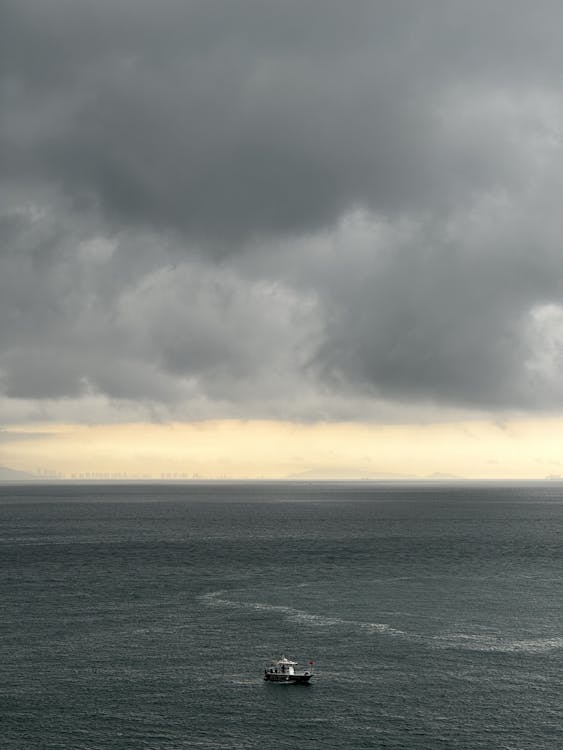
I spit into my scratched dive mask—a gift from a sunburnt Irish tourist—and pushed out into the violent surf. The freezing salty water streamed through my coarse dark hair and over my bare arms and legs, easing the itch of recent mosquito bites there. The sun painted bright, moving lines on my dark skin through the surface of the water as I swam. I clutched my jerry-rigged spear in my left hand and kicked forcefully out into the calmer waters above the local reef.
My first four dives yielded nothing but a slight pain in my chest and dizziness. I treaded water on the surface to catch my breath as the sun finally broke through the heavy blanket of clouds overhead. On my fifth dive, I caught a small brownish sea bass and stowed it carefully in the linen satchel tied around my waist. It would be enough for a dinner, but I had little reason to be happy about it. I needed to sell a full satchel at the market at least twice every week to pay for heating, clothes, and the leaky roof above my head.
Desperation made me swim out much further from the shore than I usually dared, especially when the waves were that choppy. I felt light-headed, but determined not to swim back to shore with just a single fish as my catch of the day.
The dives out there were deep, 12 metres at least, maybe 14, which left little oxygen left in my lungs to hunt on the bottom. The water was turbid and the corals dull and dying. A squid shot right at me, spun around, and fled in a zig-zag pattern. I kicked to get deeper, clenching my jaws against my burning lungs and spasming diaphragm imploring me to breathe. The squid squirted a dreary blotch of ink, jerked right, and hovered in the current. The brown-green on its back almost made it blend in with the rocky bottom beneath it. Almost.
I aimed my spear, pulled the trigger, and two brittle rubber bands launched the pointed metal bolt inside it forward. It missed the squid by a tentacle’s breadth, and the semi-fluid creature vanished in the murk along a strange line on the sea floor. Darkness closed in on my vision, and I frantically looked back up towards the bright surface far above me. Maybe too far.
I kicked off the coral with my bare feet, feeling it cut my left sole, and struggled upward. I let go of my spear to use both of my arms, but the urge to breathe was already overwhelming. I sucked in a good mouthful of saltwater along with fresh air as I broke the surface. Violent coughs rocked me as I kept kicking, and my head spun with a sudden undulating tinnitus in my left ear from the rapid decompression.
Had my life not already proven the contrary, I might have almost called myself lucky that I managed to find my spear again. It was on that dive that I saw the line along the sea floor a second time. I waved water towards it with my hands to wash away the sand and found a thick rope buried in the mud. It led a dozen more metres along the sea floor. I almost dropped my spear again when a wreck suddenly congealed out of the dark.
The small ship must have sunken over thirty years ago, because I would surely have remembered it capsizing so close to my village, had I already been around to witness it. A mako shark circled the broken hulls, its sharp-toothed mouth slightly open, black eyes fixed on nothing. I swallowed my fear and dived. Starving was a much more real threat than the shark was.
At the bottom, I seriously reconsidered my view on luck. Razor clams covered the entire underside of the sunken ship. I started wresting them from the hull in a wild frenzy, paying no attention to the pain when they cut deep into my fingers and palm. No one had harvested razor clams around my village in ten years, and they must be worth a fortune served with parmesan cheese to plump tourists in the local restaurants.
I had almost filled my bag to the brim during several dives when the shark came back. I screamed, stupidly, and almost did not make it back to the surface with empty lungs. It bumped into me with its rough snout as I scrambled away from it. Then it spun around, and dived back down to the wreck. I turned and swam for my life. I had never heard of a mako shark harming a human, but I was not keen to be the first. Besides, I could always come back the next day for more clams.
The swim back to the shore drained me. Half-way, I was sure the icy waters would be my grave. But the adrenaline pumping through me brought me back, coughing and slumping to my knees on the shore. Even two hours later, back in my mouldy, one-room apartment, I did not find the strength to smile at my victory at sea.
A deep ache crept into my bones and behind my eyes, and I felt sick to the stomach. My physical exhaustion mingled with despair when I upturned my satchel unto my small plastic table. Half of the clams were open. They were spoilt and would never sell. Even most of the closed ones looked sick, their shells brittle and their flesh mottled and grey. The water around the wreck had been too murky for me to see the lousy shape they were in when I had harvested them.
I collapsed on my bed, huddled in a wet towel, and felt like throwing up. Then an idea struck me. I rummaged through the boxes that littered my apartment, cursed, turned on the sole bare light bulb on the ceiling, and returned to my search. Finally, I found the book I was looking for: An Introduction to the Circulatory Systems of Marine Animals.
I tore through the pages, trying to put the scientific thinking I had been taught as a lab assistant back into gear. My thoughts felt clumsy and fleeting, but I pushed through the clouds in my head. The clams looked just like the fish suffering from bone marrow depression we had used for our research. Well, they were clams, not fish, to be sure. But just like the fish, they were barely clinging on to life, half of them dead fresh out of the water. As if the razor clams, too, were suffering from too much of a potential cure for leukaemia.
There it was. Black on white. Clams had a rudimentary blood system, but their blood cells were sophisticated enough for them to even develop leukaemia themselves. I had found another species we could isolate the drug from we had been looking for. I was sure of it. Probably the fish had not produced the substance in the first place, but some sort of algae or plankton that both fish and clams fed on. On my scratched and yellowed table lay the cure for lymphocytic leukaemia.
I fell back into my bed, satisfied, but still shivering. Tomorrow, I would use one of my friend’s phones to call the pharmaceutical company I had worked for. And maybe rival companies as well, see who had the most to offer. I would bring back jobs and food to my village—and to my table. My body still echoed the feeling of waves lifting me up and down as I closed my eyes and fell into a dreamless sleep.
I did not make it to the toilet in time when I woke the next day, and vomited bile and blood all over the floor. I staggered to the cracked bathroom mirror to discover a small trickle of blood flowing from my left nostril as well. I collapsed, writhing in pain and fever.
I do not know how, but I managed to reach my front door and call for help. My neighbour is running up and down the village as I write this, trying to find someone who can drive me to the next hospital. It is a 3.5 hour drive on a bumpy road, and the nearest clinic does not even have an intensive care unit. That was why the pharmaceutical company I had worked for had established their own clinic in the village in the first place. I know without a doubt that I am already too far gone this time, even if we leave right now. I am dying.
The doctors had warned me that the Dengue fever could become worse if I contracted it a third time. They had given me nice little brochures outlining mosquito nets in all shapes and sizes, expensive window-covers, and the best kinds of repellants. I would have gladly stuck the flyers up to where their respective suns did not shine. I live basically hand-to-mouth and spend the few pesos I make spearfishing on food and my shabby apartment—and I still go hungry one in three days. If I could somehow scrape together the money to buy any kind of net, it would surely be the type to catch fish with, not the one to keep mosquitoes out.
I wonder whether I should even take this story and my discovery with me or just throw the scraps of paper out the window. It is not like anyone from my village would ever receive the leukaemia drug if it is successful—nor will they get a share of the profit the company will make. And I am not so sure anymore whether the rest of the world actually deserves this cure.
Read or listen to
and explore the science and philosophy behind it.
